NexaStock
Demo project and In production
A stock-management product designed to help Malian retailers, distributors, and workshops track what is available, what moves, and what needs replenishment.
- Client:
- NexaWeb Mali (internal product).
- Industry:
- Retail, distribution, and workshops.
- Year:
- 2026.
- Duration:
- 3 months.
- Roles:
- Requirements, UX/UI design, back-end and front-end development, testing, documentation, and deployment.
- Technologies:
- Laravel, PHP, MySQL, Bootstrap 5, Vite, PHPUnit.
Context
Many small businesses in Mali (shops, small distributors, and workshops) track inventory in
notebooks or spreadsheets, or use tools that do not provide a clear enough history.
- Result: stockouts are discovered too late, discrepancies are difficult to explain, and there is little visibility into what is moving.
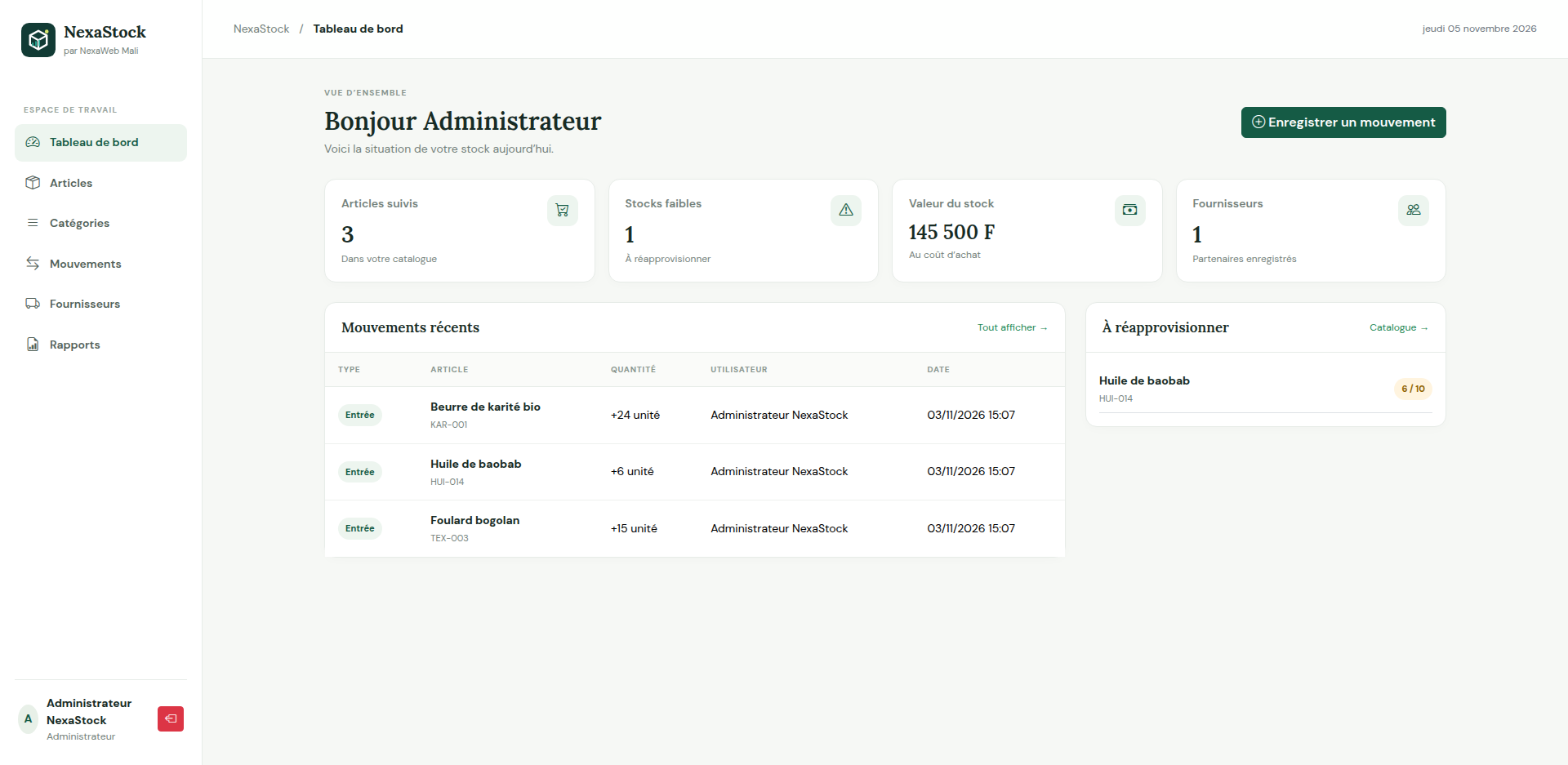
- NexaStock meets this need: a simple dashboard showing what is available, what is moving, and what needs replenishment.
Challenges
Reliable, traceable quantities: every balance must be explained by validated movements, with no silent data changes.
Separating each company's data: no customer should be able to read or change another company's data, including by changing a URL identifier or exporting data.
Everyday, mobile-first use: quick entry in a few clicks, a lightweight interface despite network or power outages, and a target of under 3 seconds for common pages.
A manageable MVP for a small team: accounting, cash management, a native app, offline mode, and advanced batch management are out of scope for the first release.
Solutions
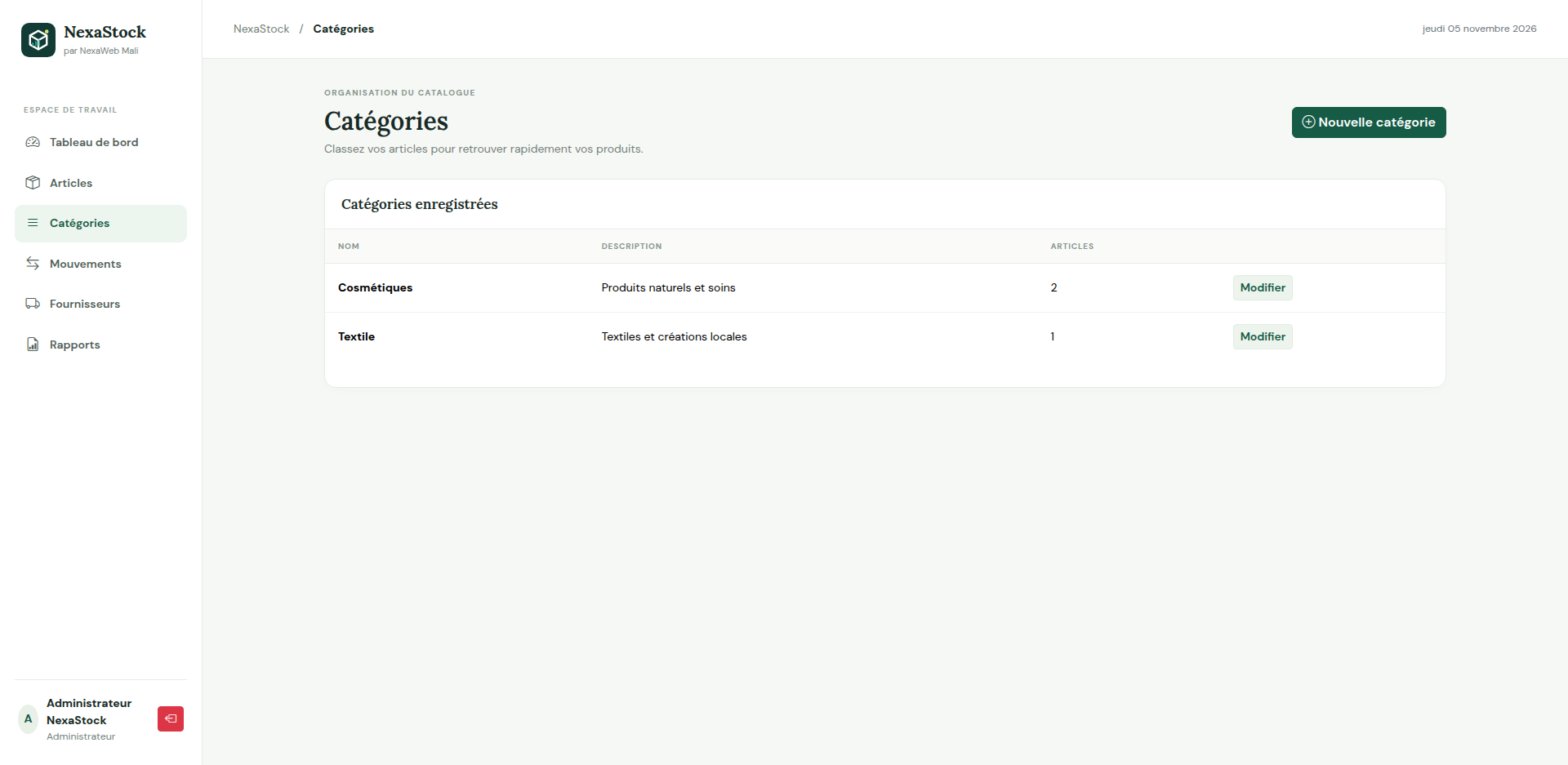
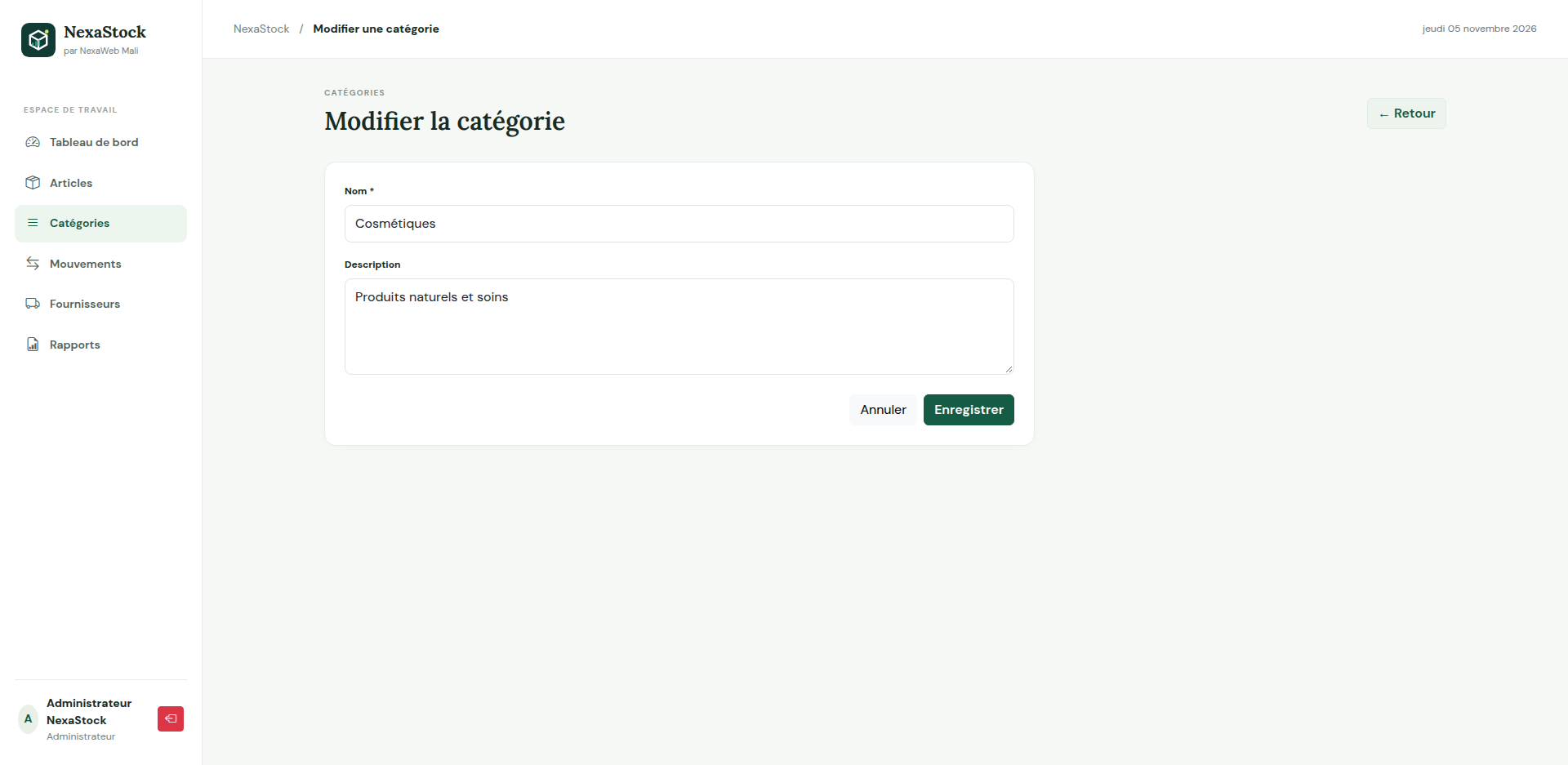
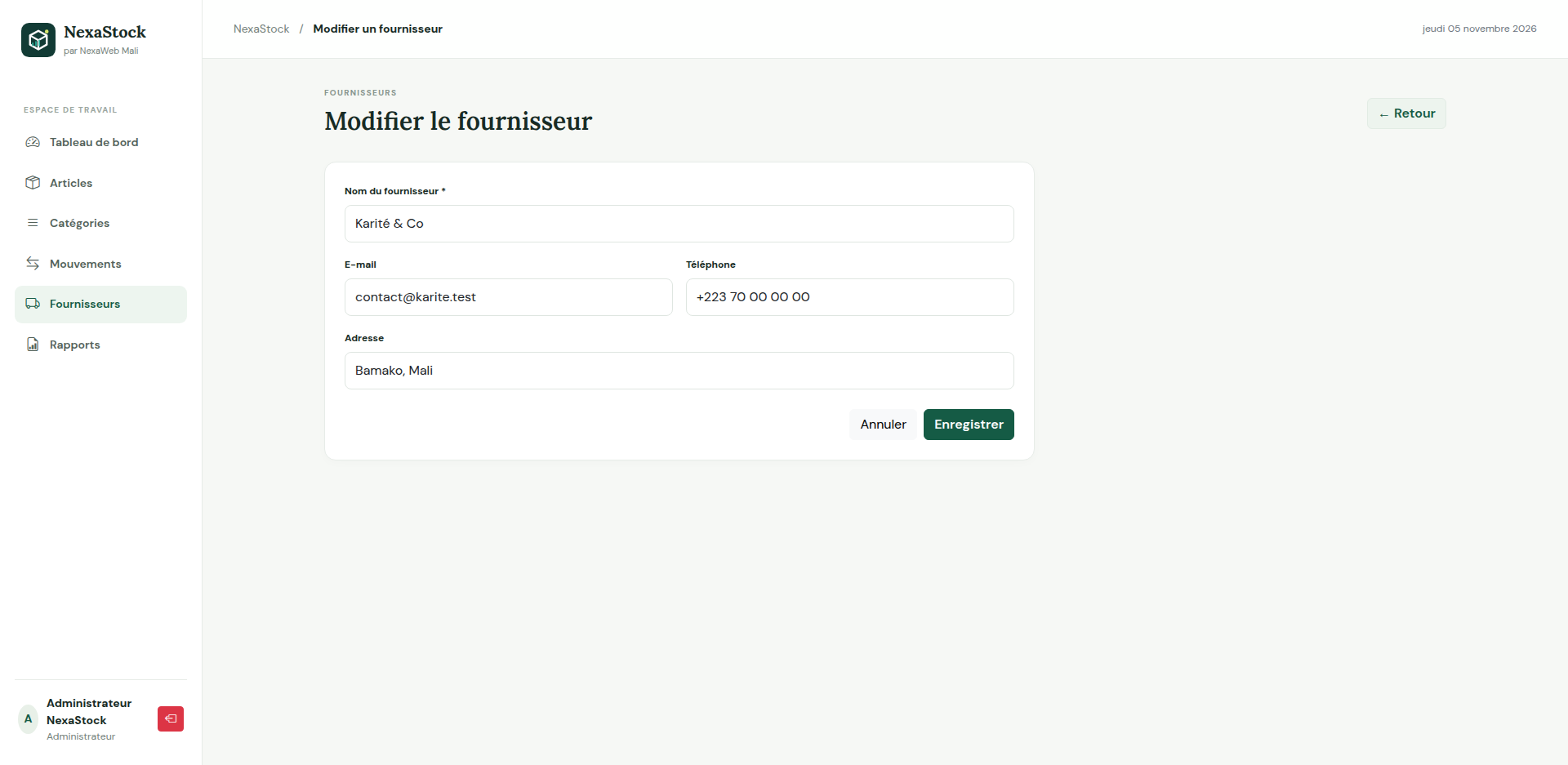
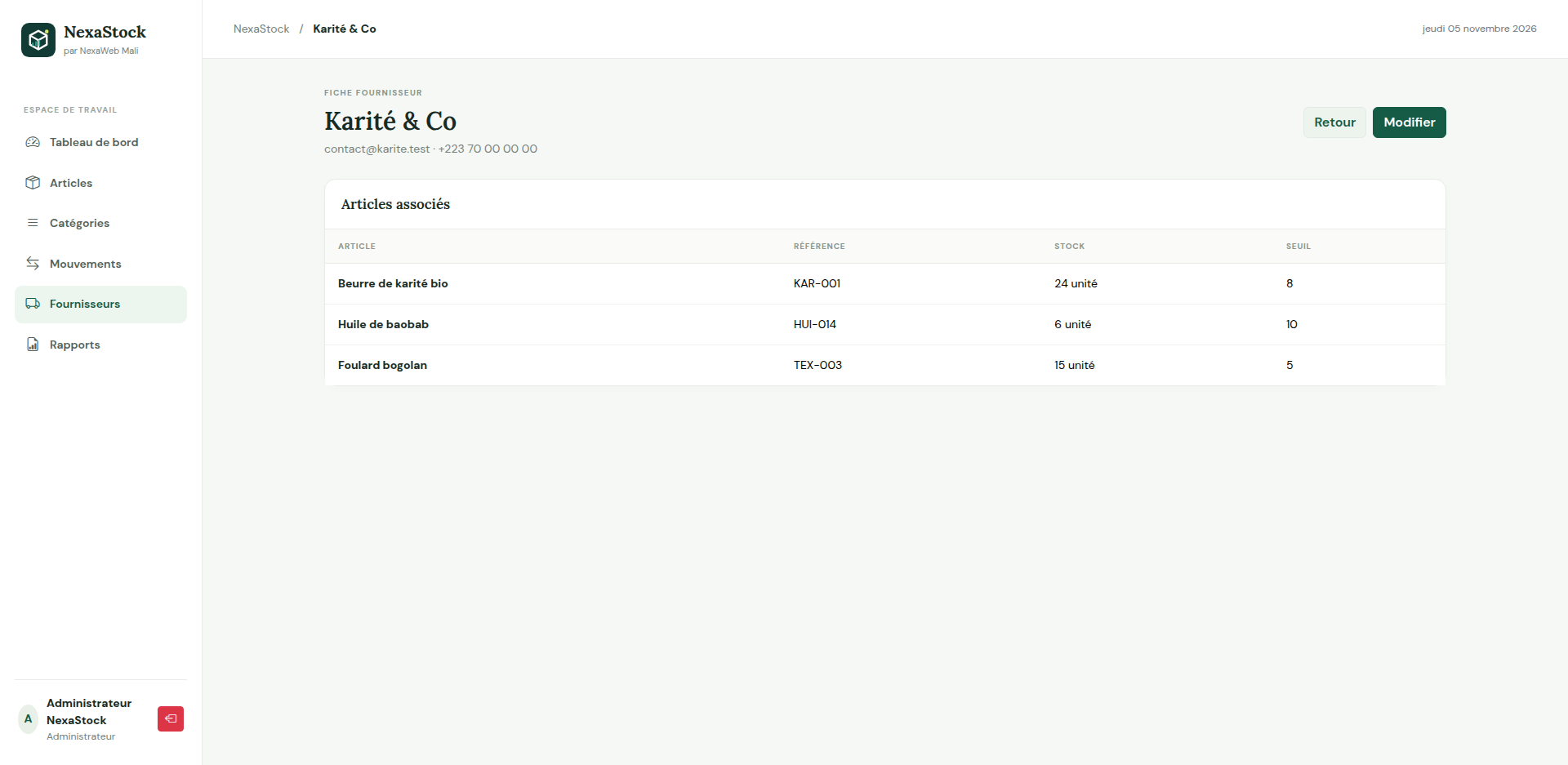
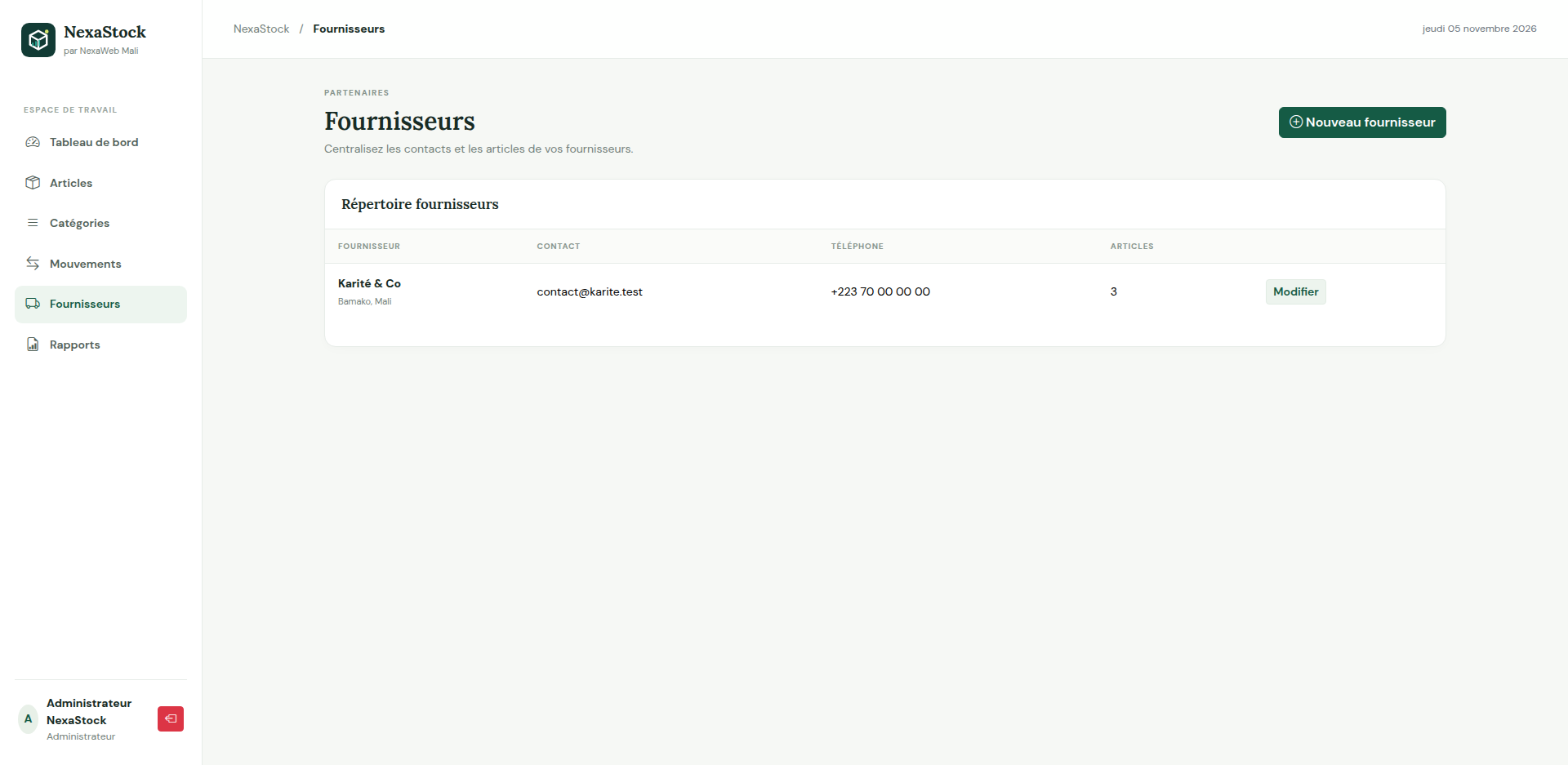
Laravel (MVC) and MySQL: 9 business entities (company, user, role, item, category, location, movement, supplier, and inventory) with atomic transactions for movements and transfers.
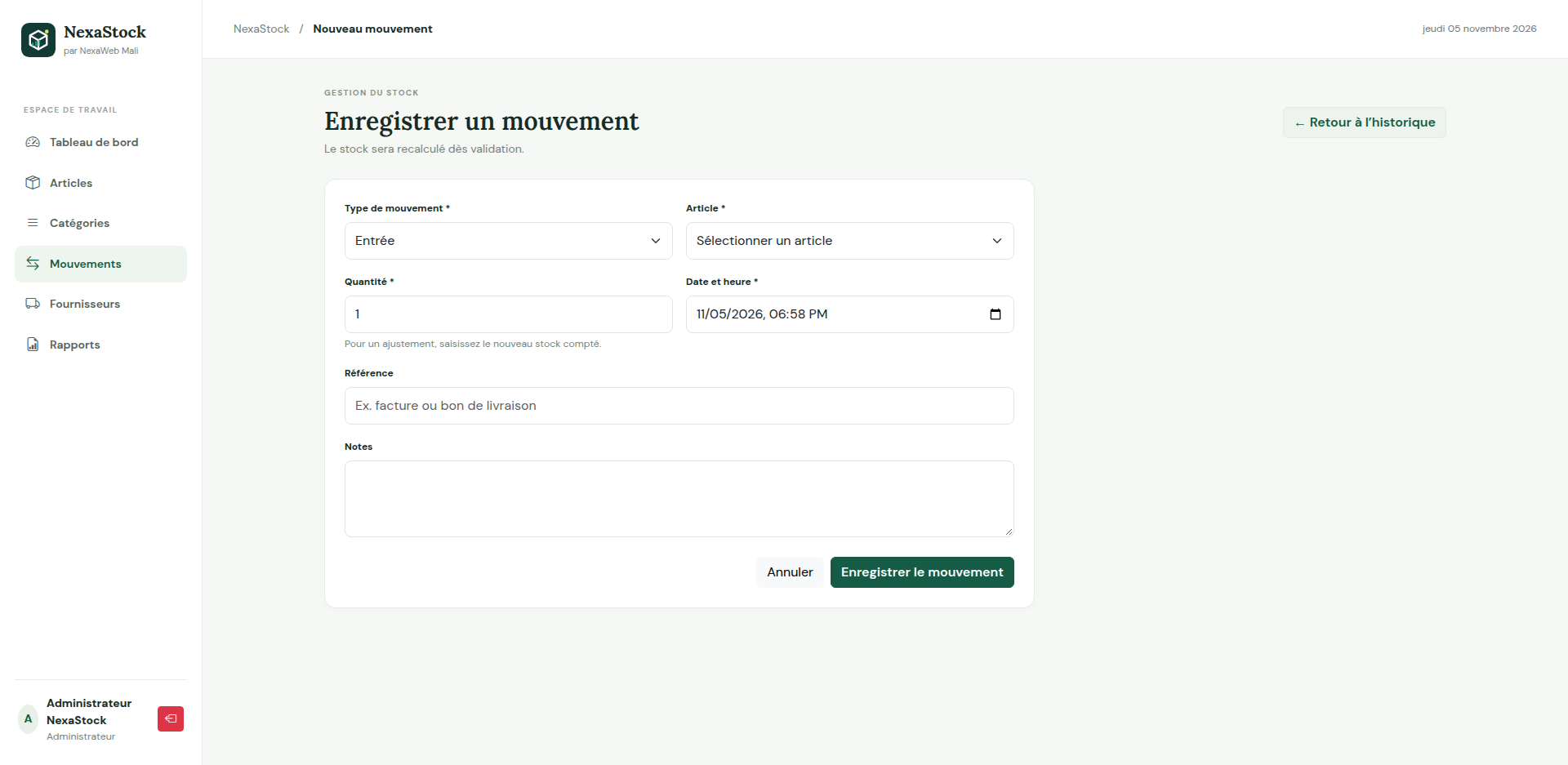
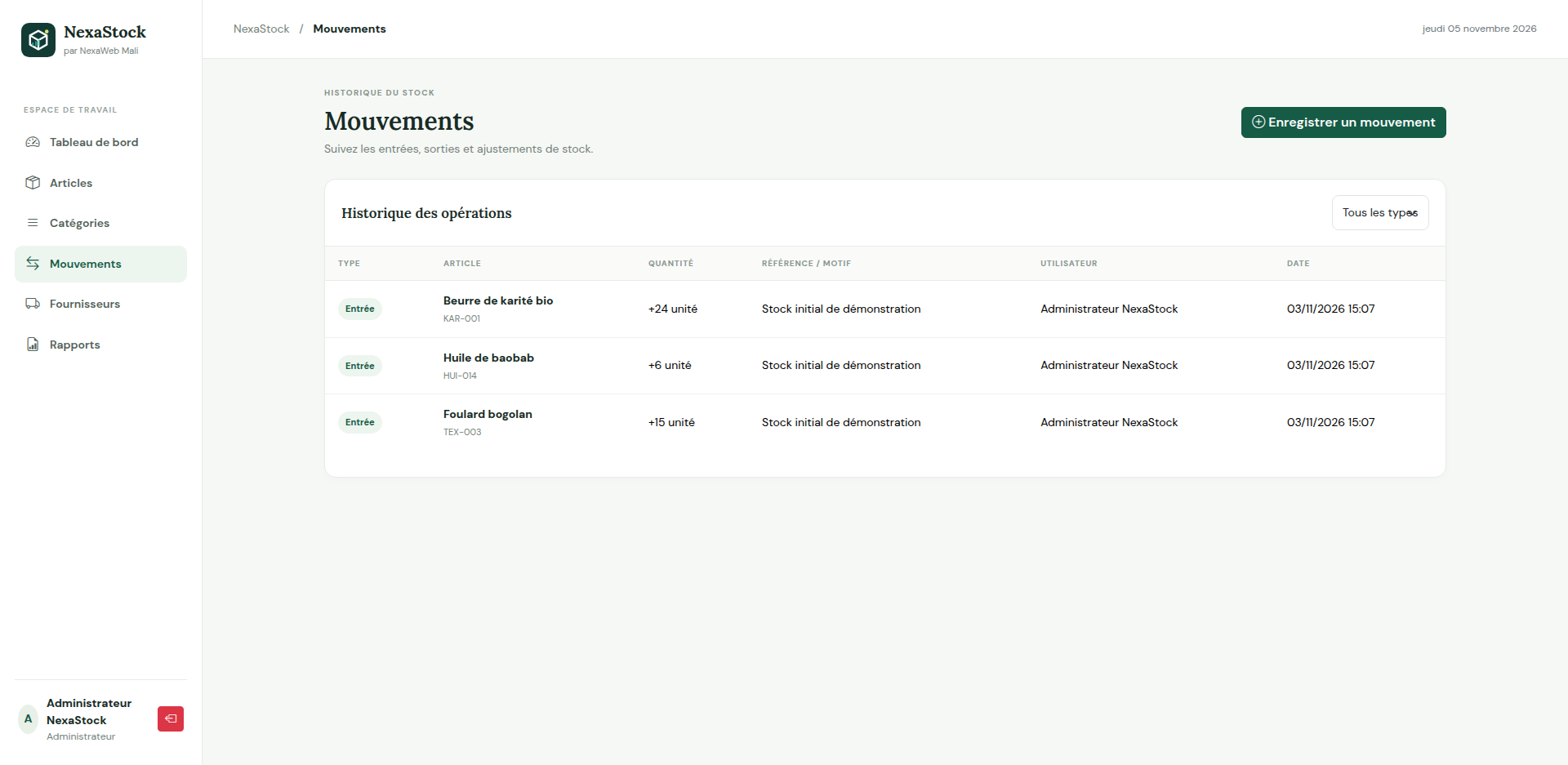
Immutable movements: receipts, issues, adjustments, and transfers record quantity, date, reason, and author. Corrections and cancellations create linked compensating movements, while an audit log records sensitive actions.
Server-side access controls: 4 roles (NexaWeb administrator, company administrator, stock manager, and operator), secure sessions, CSRF protection, login rate limiting, hashed passwords, and HTTPS in production.
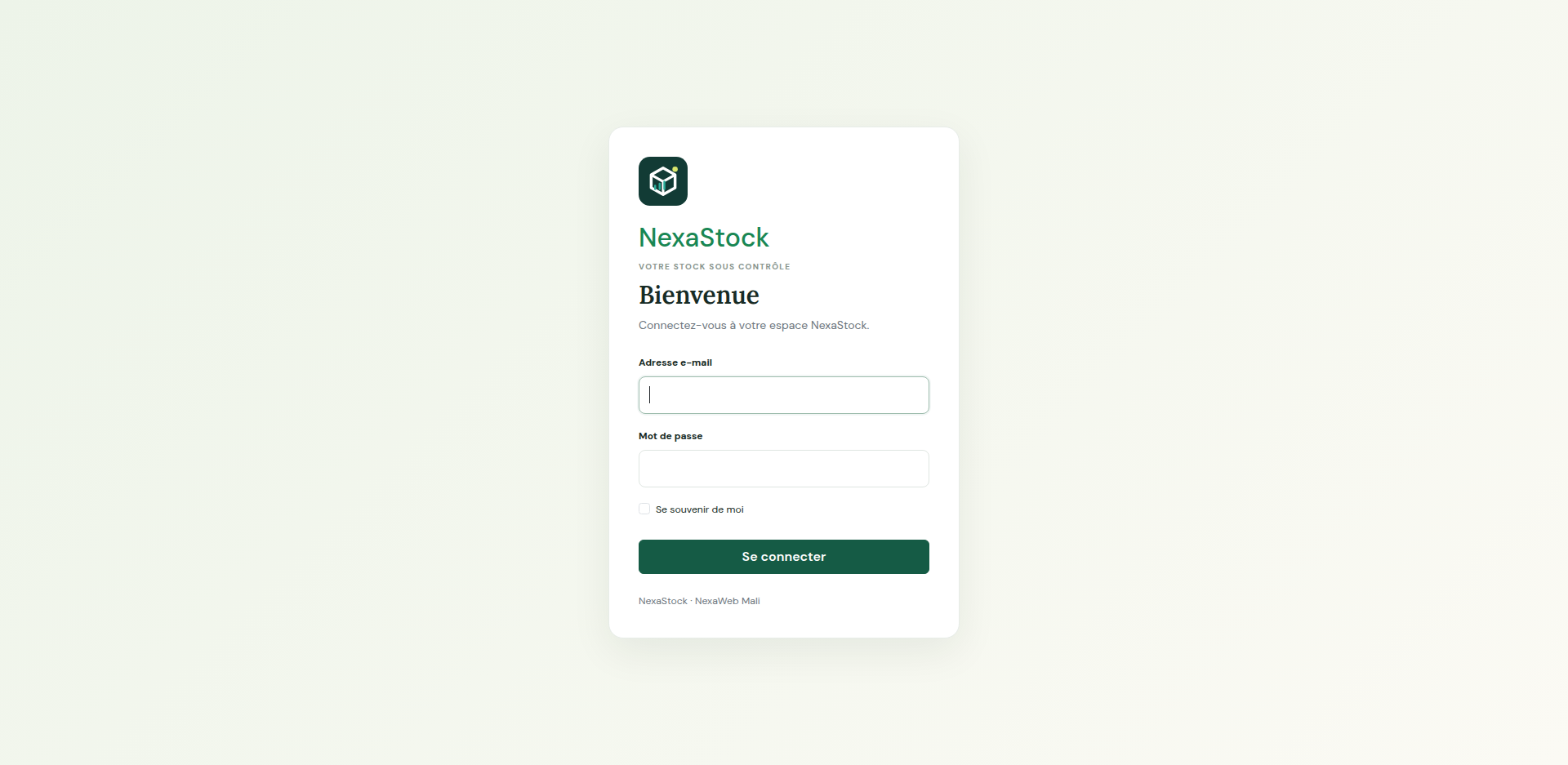
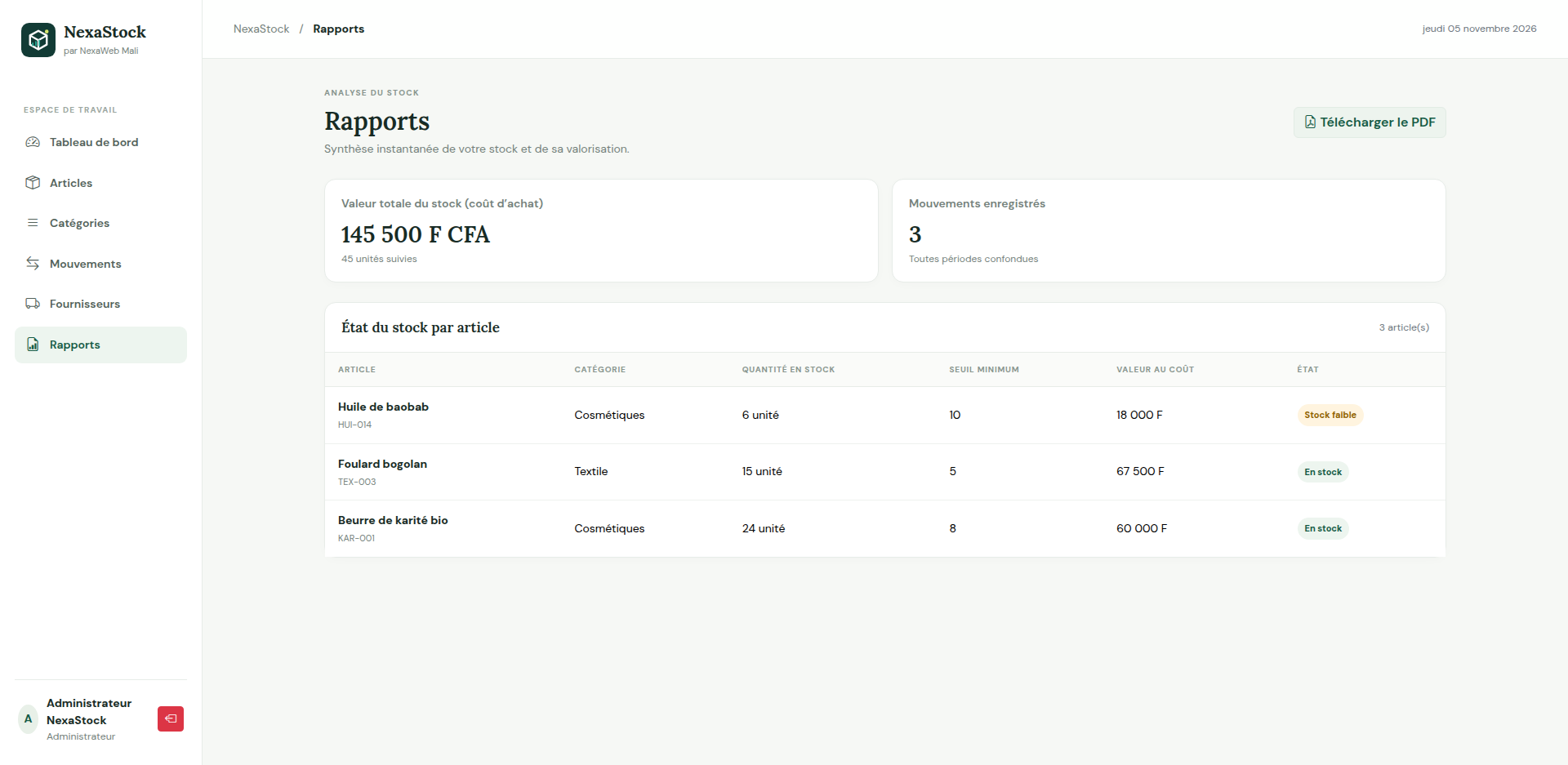
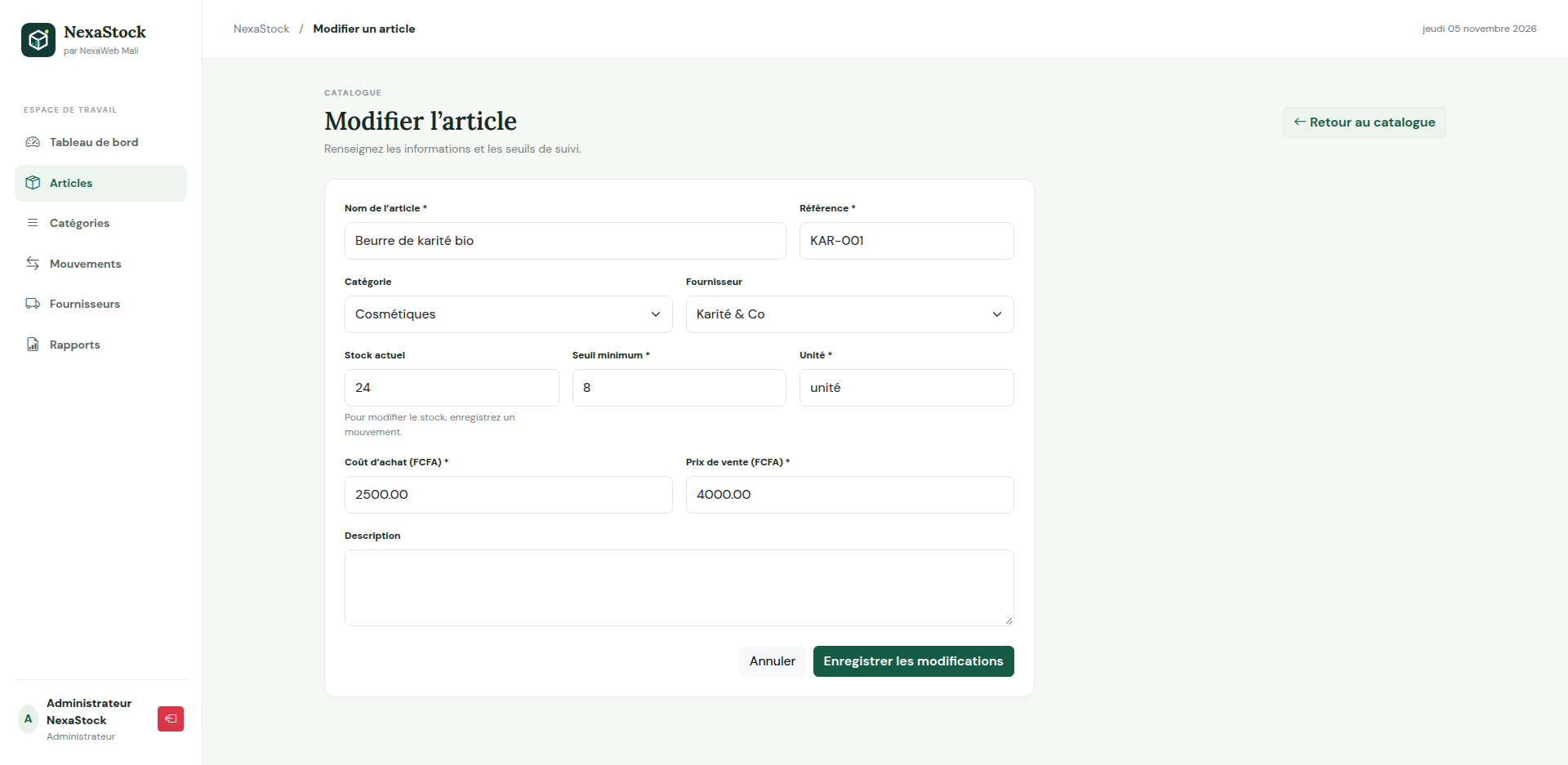
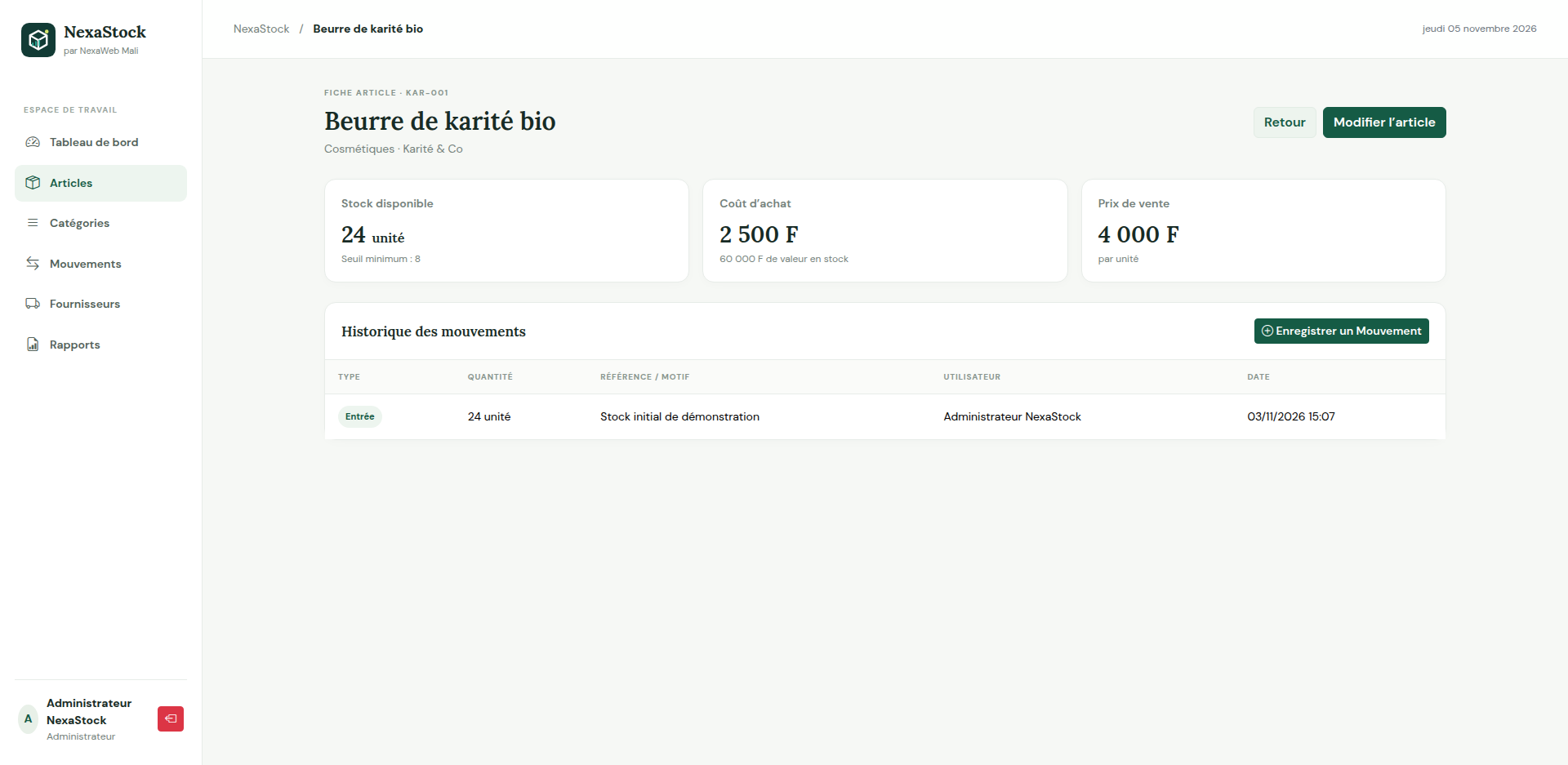
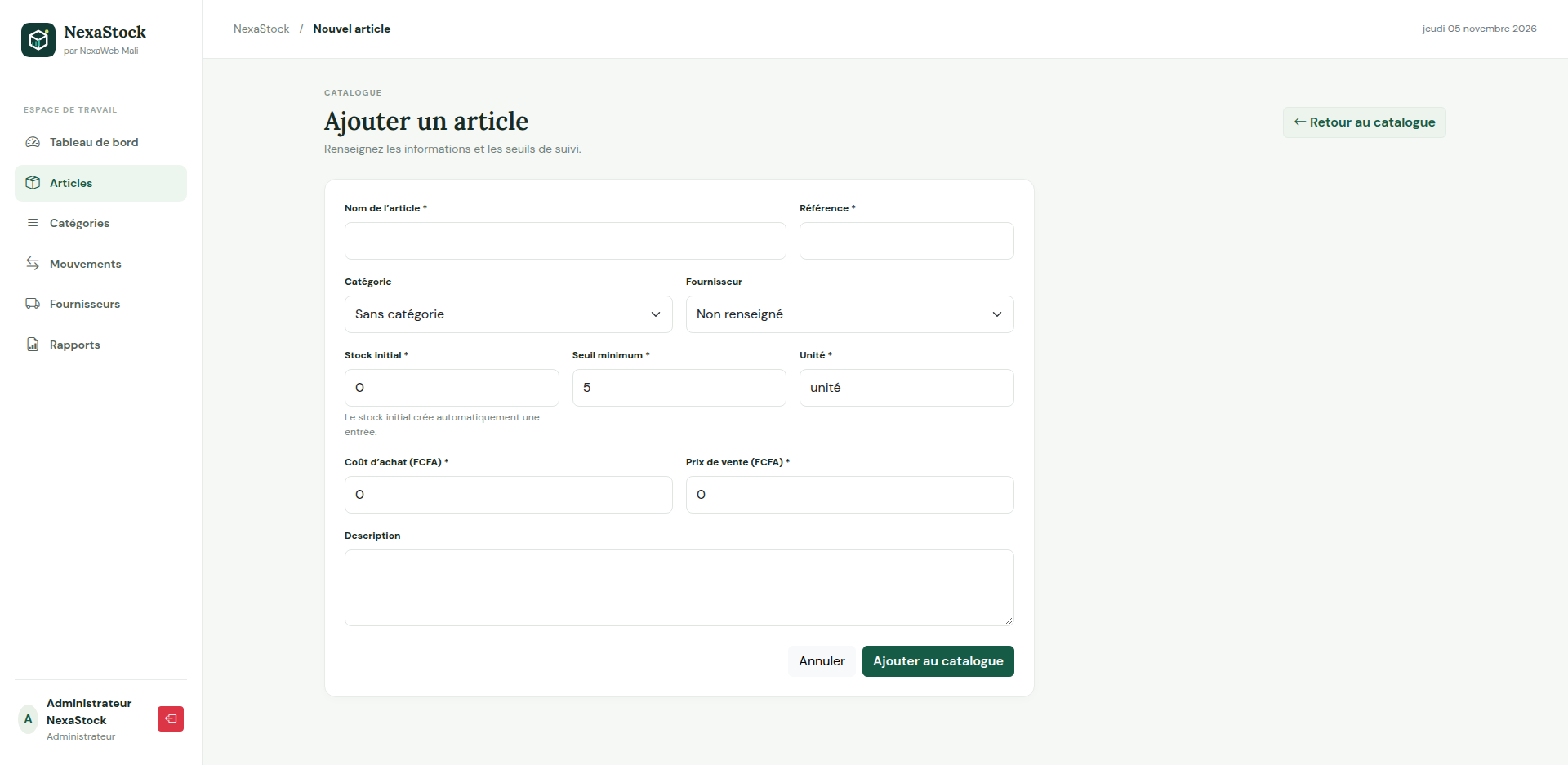
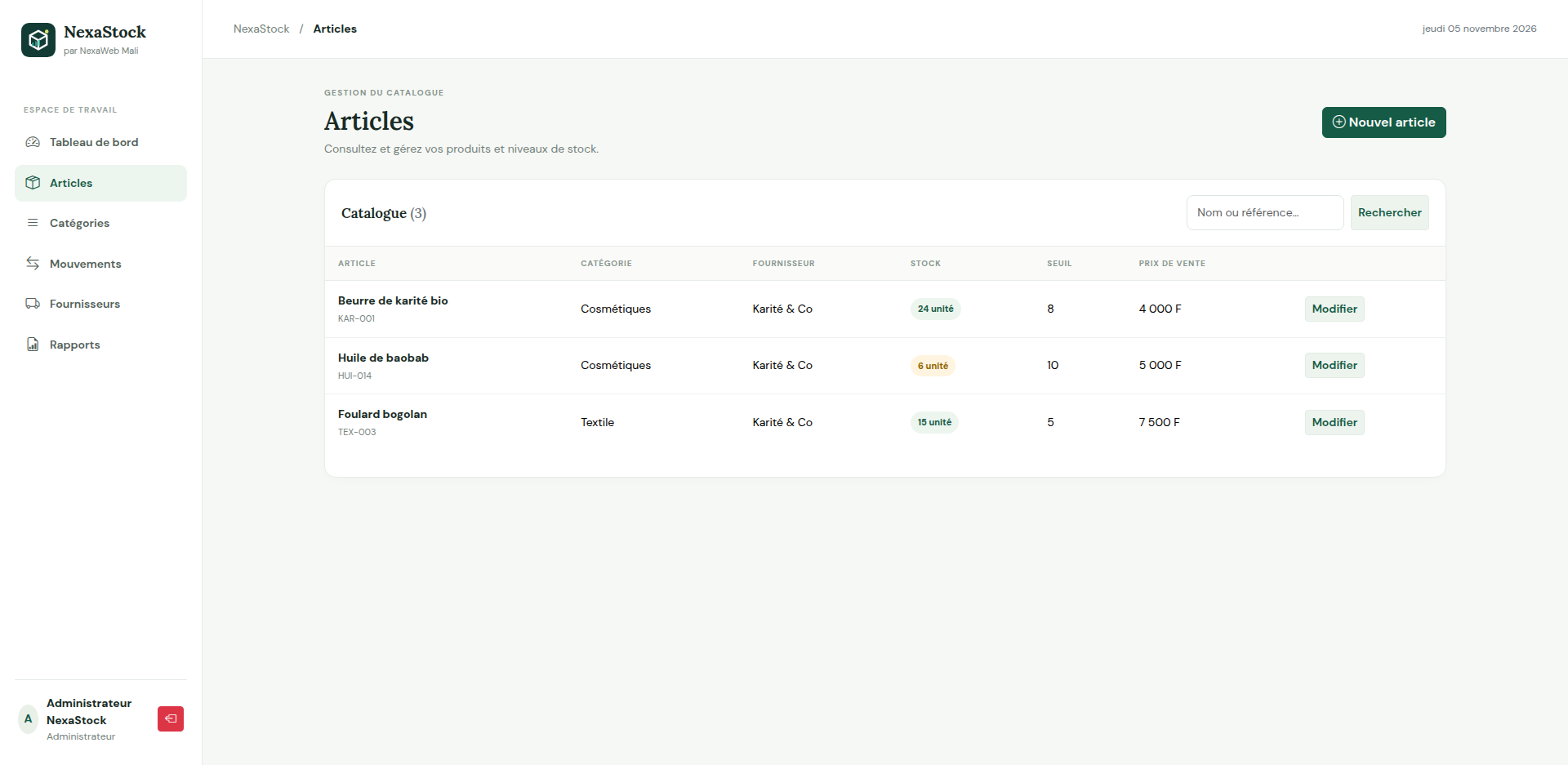
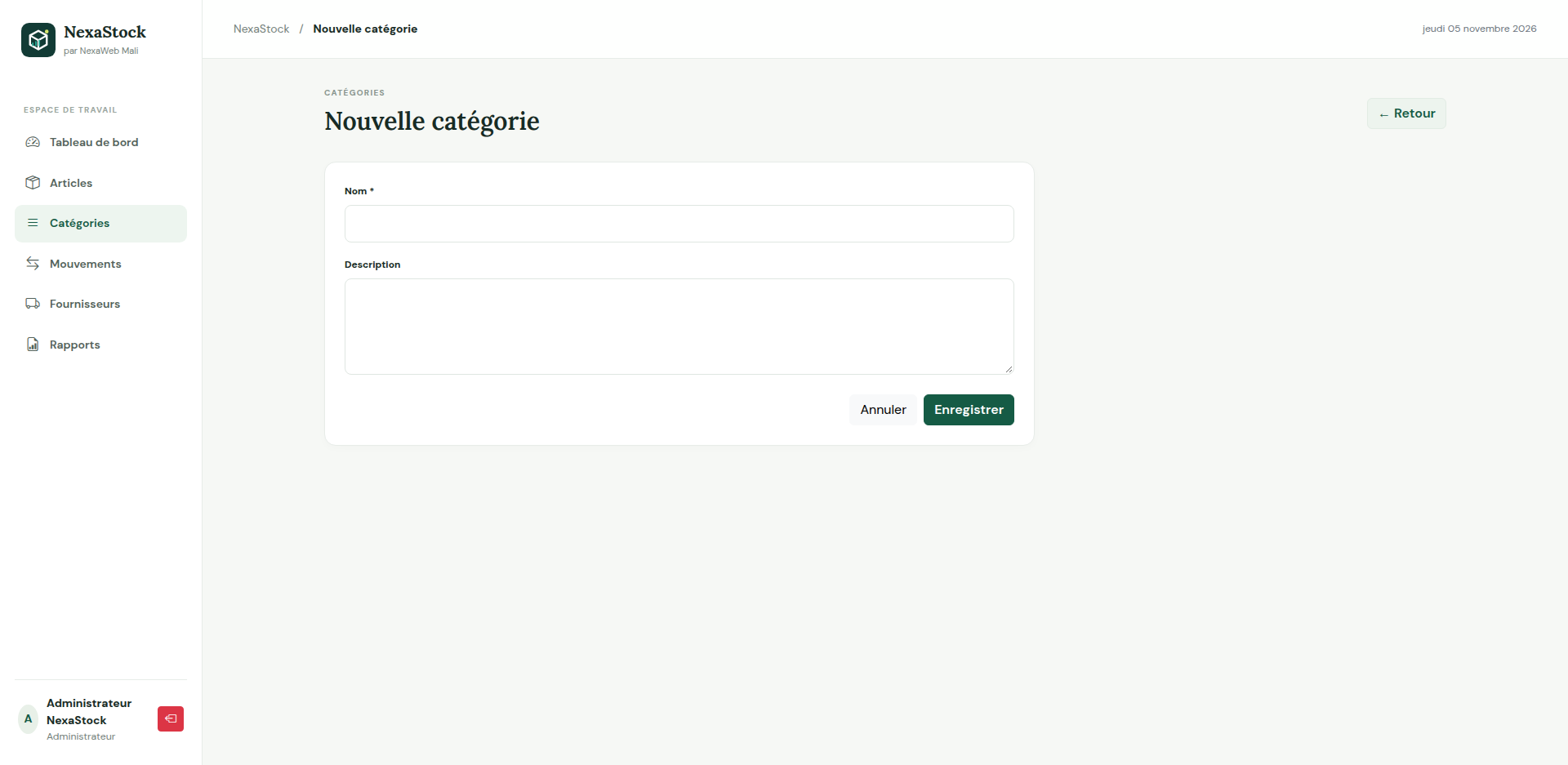
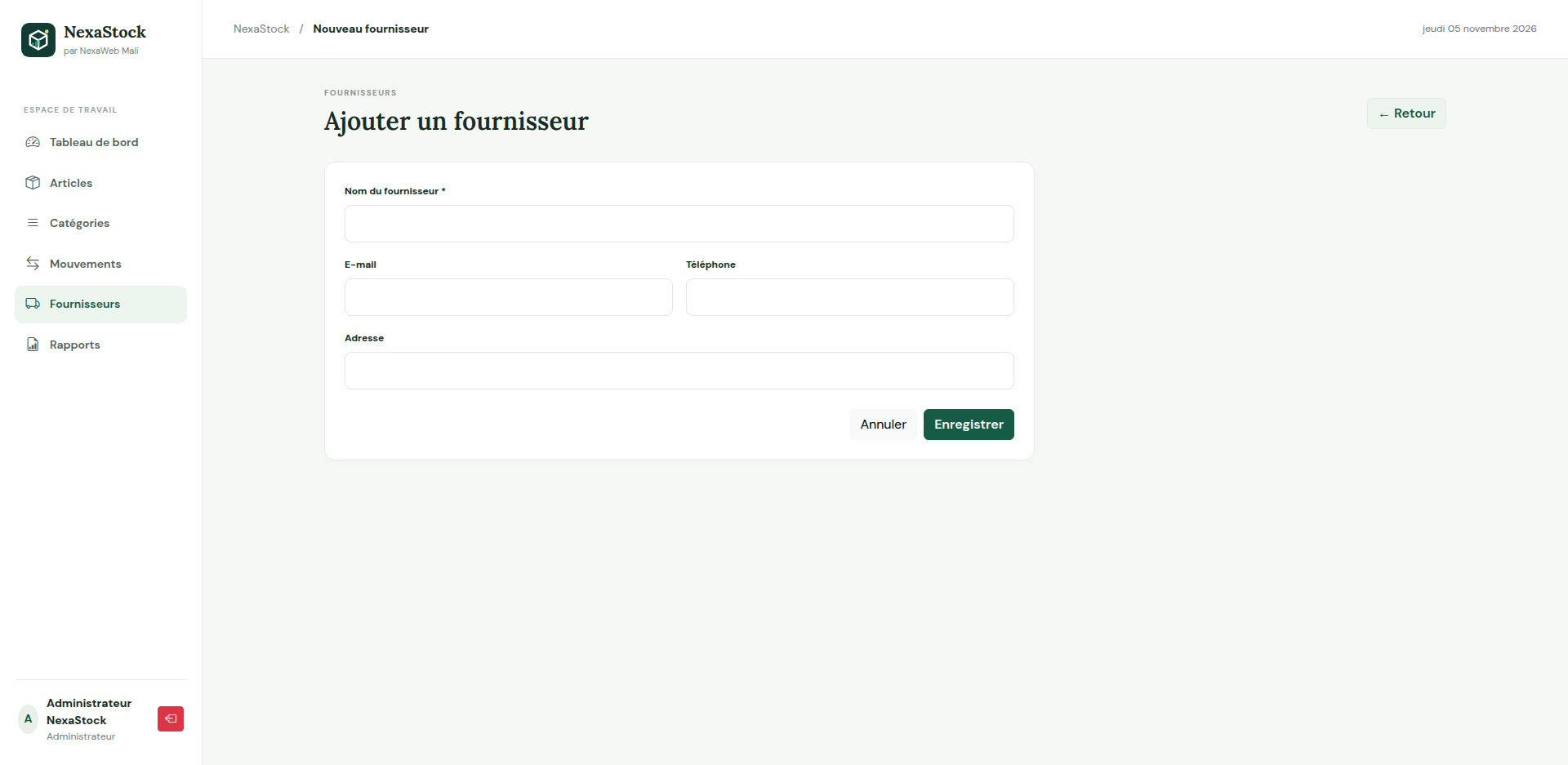
Guided workflows and a product-specific interface: receiving, issuing (negative stock is rejected), inventory with justified adjustments, an exportable replenishment list, and CSV import with an error preview. The responsive Blade interface has a dedicated NexaStock logo and palette; alerts use text and icons as well as color.
Operations and quality: development, staging, and production environments, secrets kept out of the code repository, automated backups with documented restore tests, and a RUN service for updates and support.
Results
- An MVP scope defined: 11 modules, including 8 essential ones (access, items, movements, alerts, inventory, reports, audit log, and company workspaces)
- 5 main workflows described across 7 screen groups (receiving, issuing, inventory, replenishment, and catalog import)
- 11 verifiable acceptance criteria, including company isolation, traceable corrections, mobile use, and backup restoration
- User validation planned: 15 interviews in Bamako, 3 to 5 pilots, and a target of entering at least 80% of routine operations in the tool
- Load time, Lighthouse scores, pilot retention, and acceptance results are to be measured after the pilot
Gallery